This article explores the longevity of cabinet painting, influenced by factors like budget, style, and the desire to rejuvenate kitchen or bathroom spaces. A key question for homeowners is: how long will the paint job last? Understanding the lifespan of a painted cabinet finish is crucial for informed home renovation decisions. By examining elements impacting the durability of cabinet paint, one can better predict and manage expectations for cabinet projects.
What factors affect the longevity of cabinet painting?
The quality of paint significantly affects its longevity. High-quality paints offer better adhesion, coverage, and durability.
For frequently used cabinets, a premium paint with resistance to scuffs and stains is essential. Though cheaper paints might lower upfront costs, they can dull and deteriorate faster, requiring more frequent repaints. Investing in quality paint maintains the cabinets’ vibrancy longer. Consider the demands of kitchen or bathroom environments when choosing paint. These areas often expose cabinets to moisture and oils, degrading lesser-quality finishes. Paints designed for high-use spaces withstand harsh conditions better. Semi-gloss or gloss finishes clean easily and hide imperfections, while paints with high scrub ratings or mildewcide enhance durability. Manufacturers indicate expected paint lifespan under ideal conditions, but actual results vary. Darker hues may fade faster in sunlight, urging earlier repaints. This makes color choice crucial for maintaining aesthetics and meeting longevity goals.
The preparation work before painting impacts the paint job’s longevity. Proper preparation ensures paint adherence and prevents chipping or peeling. Removing grease and grime is crucial for paint bonding, while sanding creates a surface for better adhesion, eliminating imperfections. The right primer seals wood, preventing tannins from bleeding through, ensuring a smooth finish. Skipping or inadequately doing these steps can lead to premature aging. In contrast, thorough preparation provides a stable foundation for both primer and paint, significantly extending the paint’s lifespan. Addressing existing damage, like cracks or holes, is vital. A flawless substrate ensures a professional finish and durable paint. Preparation varies by material requiring specific steps or primers to maximize paintwork lifespan.
Humidity, temperature fluctuations, and sunlight impact painted finishes’ durability. High humidity can cause swelling and blistering, especially in moisture-rich kitchens and bathrooms. Mold-resistant paint and proper ventilation prevent mold growth and discoloration. Sunlight causes fading and weakens paint. UV rays degrade pigments and resins, evident in darker shades. UV-blocking films, blinds, or curtains counteract this, while UV-resistant paints add extra protection. Temperature swings cause expansion and contraction, leading to cracking. In extreme climates, flexible paint accommodates movement. Maintaining consistent indoor environments enhances paint stability, ensuring long-term cabinet finish success.
How often should cabinets be repainted?
Chipping, fading, or wear suggests repainting. Kitchens’ frequent use leads to visible surface changes. Regular inspections reveal early distress signs, like chips near handles. Minor imperfections can be touched up, while discoloration or significant issues warrant a full repaint. Inspections should also uncover underlying issues like water damage or mold, which affect repainting. Persistent grime hard to clean signals a compromised protective layer. Prompt attention maintains cabinet appearance, preventing degradation. While some signs are visible, changes in texture or tactile feedback may indicate wear. Uneven surfaces denote potential substrate issues. Professional painters provide insights into repainting needs.
Regular maintenance extends repaint intervals. Gentle cleaning avoids damaging the finish. For grease removal, a mild detergent mix suffices. Touch-ups for cracks or chips prevent peeling. A maintenance schedule predicts wear effects. High-use environments might need more reviews of the paint’s condition. Consistent care prolongs painted finishes, securing protective qualities. Maintenance plans depend on household size and usage. Professional consultation offers tailored strategies for specific needs. Consistent care preserves appearance and structural integrity.
Usage frequency impacts repainting needs. Busy households experience faster wear due to high traffic. Factors like frequent meal preparation intensify staining and deterioration. Less active households need less frequent repaints. Adjusting maintenance schedules preserves the finish’s integrity. Implementing protective measures reduces wear in busy kitchens. Handle covers and felt pads minimize door impact. Chemical spillages require extra care. Liners or mats prevent scratches, while childproof mechanisms protect surfaces. Lifestyle influences maintenance tasks. Selecting compatible cleaning supplies enhances longevity. Understanding household dynamics prepares for usage-specific issues, keeping cabinets vibrant.
How can you extend the life of painted cabinets?
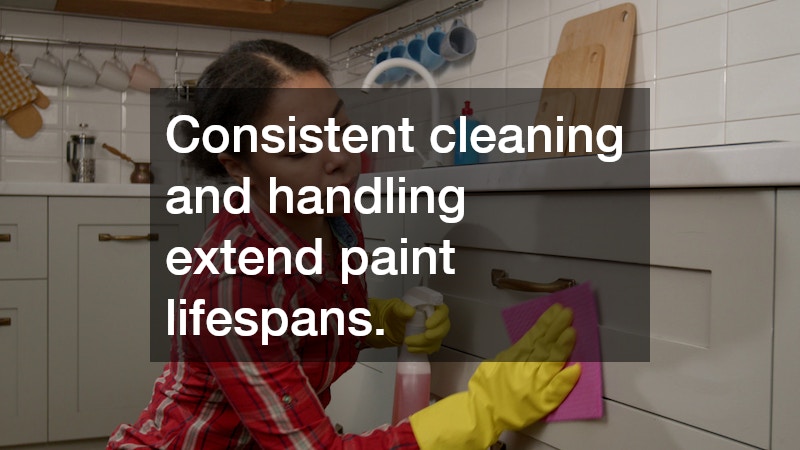
Consistent cleaning and handling extend paint lifespans. Avoid abrasive materials and use gentle solutions. Mild soap and warm water clean effectively; drying prevents moisture issues. For stubborn stains, use specialized cleaners without harsh chemicals. Regular polishing restores sheen and adds scratch protection. Inspections identify early issues that maintenance can prevent.
Addressing damage quickly preserves appearance. Ignored issues lead to serious deterioration. Repairing minor damage with touch-up paints prevents further harm. Immediate action ensures both aesthetic and structural corrections. Sanding rough edges and suitable fillers prevent recurrences. Professionals ensure color matching and seamless repairs. Seasonal inspections prevent latent issues from surfacing. Preventative maintenance reduces unexpected downtime and costs.
Protective topcoats increase durability and enhance appearance. Topcoats shield from water, chemicals, and abrasions. UV-resistant finishes prevent fading. Topcoat choice depends on use and environment. In humid areas, moisture-resistant coatings prevent damage. Professional application provides even coverage. Reapply finishes as part of maintenance. Regular refreshes sustain toughness, extending paint lifespan.
The longevity of cabinet painting varies, but understanding factors and taking proactive steps enhances durability and beauty. Quality paint, thorough preparation, and mindful care ensure cabinets retain allure and can be achieved when you work with a professional cabinet painting service. Addressing environmental aspects and following a tailored maintenance schedule mitigate common issues. A strategic approach involving the right materials and consistent upkeep supports lasting cabinet paint, ensuring aesthetic satisfaction and high returns on investment.